| |
These links show search results in a new window: |
|
|
|
|
|
|
|
|
|
|
|
|
| |

|
|
| Home
> Science |
Science & Nature Books
|
BooksOnline.co.uk
provides easy access to 1000's of bestselling science and
nature books online and other popular book titles, including
audio and ebooks. Browse by category to see other current
bestsellers by subject and author links. |
|
| Recommended
Titles: |
| 
|
| |
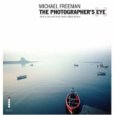
Design is the single most important factor in creating a successful
photograph. The ability to see the potential for a strong picture
and then organize the graphic elements into an effective, compelling
composition has always been one of the key skills in making photographs.
Of course, digital photography has brought a new, exciting aspect
to design first because the instant feedback from a digital camera
allows immediate appraisal and improvement; and second because image-editing
tools make it possible to alter and enhance the design after the
shutter has been pressed. This has had a profound effect on the
way digital photographers take pictures."The Photographers
Eye" shows how anyone can develop an eye for seeing great digital
photos.. |
|
| |
Amazon.co.uk Review: Inheriting the mantle of revolutionary biologist
from Darwin, Watson, and Crick, Richard Dawkins forced an enormous
change in the way we see ourselves and the world with the publication
of The Selfish Gene. Suppose, instead of thinking about organisms
using genes to reproduce themselves, as we had since Mendel's work
was rediscovered, we turn it around and imagine that "our"
genes build and maintain us in order to make more genes. That simple
reversal seems to answer many puzzlers which had stumped scientists
for years, and we haven't thought of evolution in the same way since.
Why are there miles and miles of "unused" DNA within each
of our bodies? Why should a bee give up its own chance to reproduce
to help raise her sisters and brothers? With a prophet's clarity,
Dawkins told us the answers from the perspective of molecules competing
for limited space and resources to produce more of their own kind.
|
|
| |
Synopsis: Why do 70 per cent of Americans believe
in angels, and thousands more that they have been abducted by aliens?
Why does every society around the world have a religious tradition
of some sort? What makes people believe in things when all the evidence
points to the contrary? Why do 13 per cent of British scientists
touch wood? In "Through the Looking Glass", the White
Queen tells Alice that to believe in a wildly improbable fact she
simply needs to 'draw a long breath and shut your eyes'. Alice finds
this advice ridiculous. But don't almost all of us, at some time
or another, engage in magical thinking? Professor Lewis Wolpert
investigates the nature of belief and its causes. He looks at belief's
psychological basis and its possible evolutionary origins in physical
cause and effect. How did toolmaking drive human evolution? Is it
the lack of an explanation about fundamental questions which is
truly intolerable? |
|
| |
Synopsis: When Richard Benson was growing up he
felt like the village idiot with O'levels' glowing. School reports
aren't much help when you're trying to help a sow give birth, or
drive a power harrow in a straight line without getting half the
hedgerow stuck in the tines. He left Yorkshire to work as a journalist
in London, but returned when his dad called with the news that they
were going to have to sell the family farm, and, in so doing, leave
the home and livelihood that the Bensons had worked for generations.
This is not only a moving personal account, but also one that reflects
a profound change in rural life. |
|
| |
Synopsis: This long established best-selling text
meets the needs of a wide range of health care professionals, including
nurses, nursing students, students of allied health professions
and complementary therapies, paramedics and ambulance technicians.
The purpose of the book is reflected in its title, "Anatomy
and Physiology in Health and Illness". The text is written
in straightforward language and is complemented by extensive clear,
full-colour illustrations. Each chapter provides an explanation
of: the normal structure and functions of the human body and what
occurs when disease or illness disrupts the normal processes.
|
|
|

|
|
Christine Padesky, Dennis Greenberger. Synopsis: This guide draws on the authors'
experience as clinicians and teachers of cognitive therapy to help
clients successfully understand and improve their moods, alter their
behaviour, and enhance their relationships. Illustrated with case
examples, the book presents the skills for identifying problems,
setting goals, and achieving the desired changes.. |
|
|

|
|
Synopsis: Profoundly attracted to animals from childhood, Temple Grandin began
early on to make links between the autistic and the animal views
of the world. Farmers and breeders were baffled that she could come
in and invariably pinpoint the cause of any aberrant or troublesome
behaviour in their animals. |
|
|

|
|
Reviews:
Sunday Times
'it provides a grandly unifying and intellectually satisfying theory
of almost everything geological, and Fortey does it full justice'
Telegraph
'...a thoroughly engrossing biography of the earth…it is as
though we’re leafing through the psychiatric case history
of our world...' |
|
|

|
|
| Reviews:
The bookseller
'This is the affecting story of her final year, told in her own
words.'
Oliver Sacks
‘I have never read anything like it ... searing, beautiful,
terrifying, and, at the same time, affirming – and reassuring’ |
|
|

|
|
Synopsis: Is there a 'physics of society'? Ranging from Hobbes and Adam Smith
to modern work on traffic flow and market trading, and across economics,
sociology and psychology, Philip Ball shows how much we can understand
of human behaviour when we cease to try to predict and analyse the
behaviour of individuals and look to the impact of hundreds, thousands
or millions of individual human decisions.. |
|
|

|
|
Amazon.co.uk Review: French photographer Yann Arthus-Bertrand and his devoted
team have spent five years putting together this voluminous gallery,
selecting 195 images from 100,000 photographs taken from helicopters
in the skies over 75 countries. It is a staggering achievement and
precisely shows how vaguely we know our world. |
|
|

|
|
Synopsis: Bill Bryson describes himself as a reluctant traveller:
but even when he stays safely in his own study at home, he can't
contain his curiosity about the world around him. A Short History
of Nearly Everything is his quest to find out everything that has
happened from the Big Bang to the rise of civilization - how we
got from there, being nothing at all, to here, being us. Bill Bryson's
challenge is to take subjects that normally bore the pants off most
of us, like geology, chemistry and particle physics, and see if
there isn't some way to render them comprehensible to people who
have never thought they could be interested in science.. |
|
|
|
|
|